Made by AutentiCoach Partners

Marc DUFRAISSE - AutentiCoach

Finding your own personal way is possible, we accompany you on the path to your Authenticity.

Friday, 10 May 2019

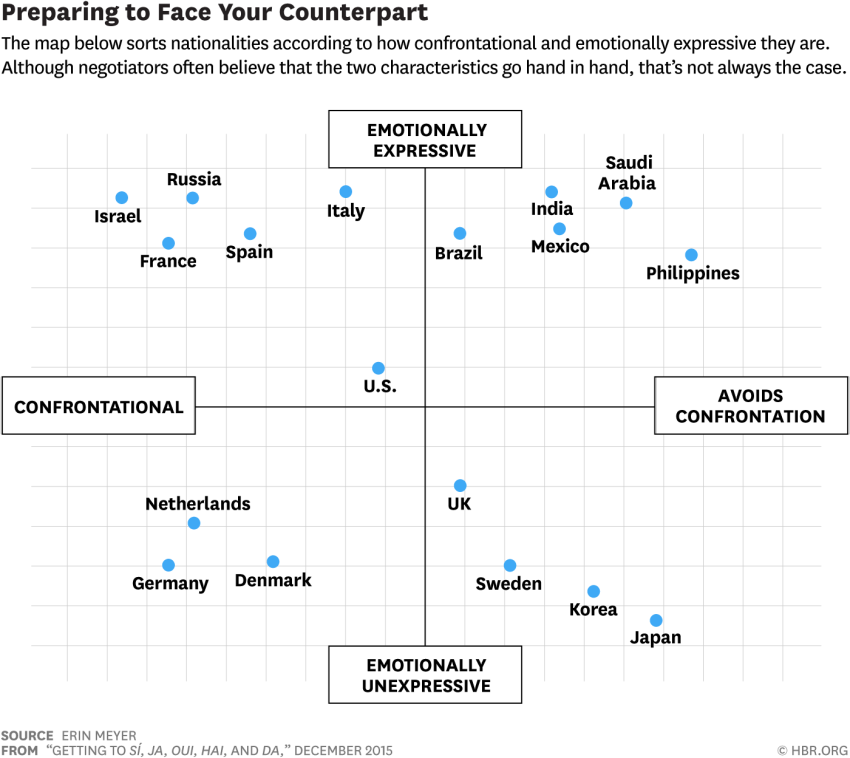
How to handle conflictive negotiations?

Effective negotiations occur when both parties are able to look at the problem from all possible angles to be open, flexible and creative when building a
solution.

Sometimes the problem is so important, what is at stake is so great that without noticing it people slowly become part of the problem.

When you are the problem, how you want to step back, not get caught , vary perspectives to propose options .... No way!

You are stuck on the issue ... you feel bad ... you take it personally ... you do not flow .

What is the problem? What do you want? What are you looking for?
Are you willing to be flexible , to listen, interact , build a solution with the other?
Or are you tense , rigid , pissed off, overwhelmed, angry...
Are you able to look at the issue with all its components,  all its potential benefits , all its possible limitations?

Breathe.
Put aside the labels, judgments.
See the other part as able, human, responsible.
Work on your flexibility, on your curiosity with the other.
Be aware of what is happening, of their body language, of what is said or untold.
Open yourself , go beyond appearances , be curious, listen ...
Free yourself , be creative, agile. Dance with the moment.
Do not block yourself emotionally.
Lead the negotiation , drive the conversation , manage the relationship with intuition and expertise .... The results depend on it.

Are you part of the problem or are you ready to co - construct a solution?

Thursday, 14 February 2019

From top performer to average leader


Developing and promoting top performers is key. It enhances employee loyalty, increases the chances of keeping high potentials in house and contributes to building a performance and trust driven company culture.
Surpringly it also has many possible drawbacks.
The first is taking away top contributors from their Expertise, where they create most value to the business.
The second is that what makes collaborators be high performers can often be what makes them be mediocre managers, unaware of the Process of managing teams.
The third is that as a consequence the company culture may be damaged by unadapted Leadership styles.


  1. Expertise
When your way of doing things works it's great.
You've been reviewing and improving it for many years to make it effective..
But don't transform it in THE one and only WAY of doing things.
When you get to manage, take a step back and support your team members in finding their own way to outperform.

  1. Process
Leadership is not only about being an expert in your field, on the area, on the content. It can help but it can also sabotage you.
Leadership is about process, about creating and maintaining the most adequate context for the team to be inspired, motivated, challenged and for them to overdeliver.
Don’t struggle to be right. Fight for results.

  1. Leadership
Give your team what they need. A safe but challenging environment where they can express themselves, help them find their way of doing things, learn and improve.
Enhance team spirit and values.

Promote discipline

Share and work closely
Adapt to each team member.

Management and Leadership are not innate.
Give your management team the means to learn to become authentic leaders.

Monday, 28 January 2019

Wisdom


He who knows others is wise,

He who knows himself is enlightened,


He who defeats others is strong,

He who defeats himself is powerful,


He who knows joy is rich,

He who preserves his way is determined.


Be humble, and you will remain entire,

Bend over, and you'll stand up straight,


Empty yourself, and you'll stay filled up, 

Wear yourself out, and you'll stay new.

The wise do not exhibit themselves, and so they shine,

They do not make themselves noticeable, and that is why they are noticed,

They are not praised, and that's why they have merit,

And because they' re not competing, no one in the world
can compete with them.

Lao Tse


Wednesday, 28 November 2018

Don't let yourself be impressed


Don't let yourself be impressed by: 

Money, academic degrees, followers, appearances, clothing possessions. 


You should be impressed when you see: 

Generosity, integrity, nobility, humility, simplicity, kindness, compassion, authenticity. 


By: Juan Arévalo

Wednesday, 26 September 2018

Do you feel secure as a leader?


Take it easy!
Trying too hard produces unexpected results:
  • ·         The flashy leader lacks stability
  • ·         Trying to rush things gets you nowhere
  • ·         Trying to appear brilliant is not enlightened
  • ·         Insecure leaders try to promote themselves
  • ·         Impotent leaders capitalize on their position
  • ·         It is not easy to point how holy you are.

All these behaviours come from insecurity. They feed insecurity. None of them helps the work. None contributes to the leader’s health.
The leader who knows how things happen does not do these things.

Consider:
When you think you are so good, what are you comparing yourself with?  God?Or your own insecurities?
Do you want fame? Fame will complicate your life and compromise simplicity in your comings and goings.
Is it money? The effort of trying to get rich will steal your time.

Any form of egocentricity, of selfishness, obscures your deeper self and blinds you to how things happen.

Lao Tzu


Tuesday, 14 August 2018

Competitive or Supportive?

Do you Compete or do you Share?

Divide or unite? 


Feel different and disregarding with others, not wanting to know about them....
 ...o...
Respect the difference, seeking what the other person brings, enriching his or her approach, his or her original contribution.

Are you competitive, seeking to be more efficient, productive, valuable than the other....
 ...o...
Or generous, supporting the other, learning from them and looking for a win win collaboration.

Are you more in scarcity, contempt, distrust, individualism....
...o...
Or in abundance, in humility, in support, in the collective.

What's more natural to you?
Where do you feel most comfortable?

Divide or reunite?
Compete or share?
Criticize or trust?
Separate or join?

Wednesday, 21 February 2018

What if we became human again?


If in the interviews or meetings, we would leave our busy agendas, our ambitious goals, our invasive mobile devices, to be in the moment, listening to people, their feelings, opinions, desires, realities, ambitions....

If, in management relations, we moved from authority, from management through coercion, pressure, fear, to the establishment of individual, adult, open alliances, accepting the diversity and originality of each individual.

If in social relations, we moved from segregation, power relations, labelling, gossip, ... to tolerance, openness, curiosity and interest in others, in their dreams, ambitions, their richness... and difficulties.

If in our lives we moved from scarcity to abundance, from greed to generosity, from competition to collaboration.

If we decided to focus, to know ourselves, to build ourselves from within to give the best of us.

If we learned to listen, to create contexts for genuine exchange, to set up collaborations, to build, to move forward, to progress.

If we stopped being sheep to become lions, soldiers to be actors, resources to be leaders.
Leaders of our lives and dreams

If we respected our values, our ideas, our principles, our true desires?
And be authentic again...

What would happen then?

Tuesday, 2 January 2018

Happy 2018!

Beyond Appearances and Judgments.

Beyond Reasonings and Reason.


Your truth is beyond that. 

It is in you, in your body, in your feelings, in your life,

 in your ability to let go and dare.


I wish you 


that 2018 brings you happiness and growth, 
with challenges and successes that will allow you to find


 Pleasure, Serenity, Fulfillment.


Happy 2018!


Thursday, 16 November 2017

Leadership is about Context & Connection


Companies struggle to create accountability, ownership and leadership at all levels...

The perception is that there are people who decide and others that execute... The relationships tend to be unbalanced, communications are mainly one way, the connection between deciders and doers is low...

What are the consequences?

Collaborators have low levels of motivation, commitment and engagement. The quality and service standards are average. In a difficult economical environment, the levels of tension and stress build up and paralyse the teams further more...

The truth is, neither the managers nor the collaborators feel happy about the situation...
The former don’t feel confident and trusting with their teams and people.
The latter don’t feel listened to nor taken into account and develop automated and routine attitudes.

You know what: This can change!

Leadership is about creating the Connection and Context that enable change and 
deliver performance.
Connection that enhances open and closer communications and develops relationships.
A Context that makes it possible to negotiate alliances with collaborators and teams with a shared commitment on common objectives.

Context & Connection.

Work on these two key drivers and you will create the team engagement and support you've always dreamt of!

The dream team at an arm’s reach! Think about it!

Any thoughts?

Thursday, 19 October 2017

The Four Key Principles of the Wise Leader


A collaborator comes to the wise leader and says:
- I have to tell you about the behaviour of one your team members
The wise leader:
- Let me stop you: Have you passed what you mean to tell me through the three filters test ?
- The three filters ?
- Your words must pass through three filters . The first is the truth. Have you checked that what you want to tell me is true?
- No, I have heard about it and ...
- Well, then you have certainly made it go through the second filter, that of goodness. Is what you want to tell me something good?
- No, quite the opposite ....
- Turning then to the third filter: is what you want to say useful?
- Useful? Not really ...
- Well... if what you want to tell me is neither true nor good nor useful, I prefer not to hear it. As for you, I advise you to just forget it….
- Ok…
- Nonetheless tell me more. I am grateful that you came to see me. I would like to hear more from you. How are you? …  How are you doing? ... How do you see your job? Your results? Any ideas, suggestions, desires, ambitions….? Any engagements I can help you with?


Truth, Goodness, Utility, … Empathy.

Tuesday, 1 August 2017

The Mask


Extraordinary David Bowie

http://www.dailymotion.com/video/x2inop

Wednesday, 22 February 2017

E-motion, energy for movement.


Data never motivated anyone.
Facts either.


What motivates people are emotions.
Emotions are generated by the meaning of what you do or what you want to achieve, through feelings, relationships, sense of belonging, by the group, the team, from the pride of being part of something big, ambitious, generous, that contributes, adds value ...


Until the end of the 20th century we thought humans made decisions only on a rational, objective, logical basis ...


From "I think so I am" to "I feel so I am."


In the late 90's Antonio Damasio scientifically demonstrated that reality is the opposite: decisions are emotional ... Without emotion no evaluation is possible, what is right or wrong, better or worse can not be defined ... no decision is possible .


Emotion is energy.
E-motion, energy for movement.


The industrial revolution was based on people being objective and rational resources for production. Human resources.


The modern, post-industrial world must take into account the emotional dimension in order to motivate and mobilise people.
Today it has become essential to give and bring meaning, share strong human values, build confidence and courage in order to generate commitment and performance within teams.


What do you think?
How do you feel?

Monday, 2 January 2017

Free and Committed

Our challenge is to be free

Free from appearances, prejudices, limiting beliefs, stereotypes, superficialities...
Free from our automatisms, our shortcomings ...

It is difficult to be free ... It is difficult not to compare oneself, not to respond to other's expectations, not to let others define you, not to try to please or to appear...
It's complicated not to be demanding with oneself, not to be dissatisfied, tense.

It is necessary to know yourself ... to have visited each corner of your intimacy ... to have experienced every emotion, feeling, thought, to have looked at yourself in the mirror... It is important to have seen yourself react, to have observed yourself in action, in paralysis, in success, in failure ...

You need to accept, to forgive, to love yourself ...
So you can be committed, take action, dare, go forward...

What do you want for this new year?
What do you commit to?

Tuesday, 15 November 2016

Tao of Leadership : Time for Reflection


Endless drama in a group clouds consciousness. Too much noise overwhelms the senses. Continual input obscures genuine insight.
Do not substitute sensationalism for learning.

Allow regular time for silent reflection. Turn inward and digest what has happened. Let the senses rest and grow still.

Teach people to let go of their superficial mental chatter and obsessions. Teach people to pay attention to the whole body’s reaction to a situation.

When group members have time to reflect, they can see more clearly what is essential in themselves and others.

The Tao of Leadership
John Heider / Lao Tsu

Tuesday, 11 October 2016

Difficult conversations ... Moments of truth

Whether personal, with a parent, or professional, with a collaborator, a boss, a colleague, a client .... we all need, at one time or another, to engage difficult conversations ... moments of truth ...


Moments of truth where our goals, our identity, our image, our influence, our balance are at stake ...
Moments of truth that move us, destabilize us, make us doubt ...

Over time, each relationship develops its preset codes and scripts. Contexts that are installed and that sometimes lock us up and are no longer useful to us. With time the scripts become more difficult to change.

It is time to create a moment of truth. A moment one to one to address the issues that matter ...

A moment to discover the truth of what there is between us, our history, our relationship, our evolution ... the truth of our relational system ...

How you manage the moments of truth?

Tuesday, 20 September 2016

Growing or Aging?

Individuals and organisations can go through different phases during their existence.

  • Growth phases of development where there is openness, learning, flexibility, movement, where are put in place new knowledge, habits, processes. Growth phases focus on innovation and continuous improvement of results.
  • "Aging" Phases where the focus is on stability, established, defined and repeated routines, processes and organisations. Aging Phases are efficient in stable environments, unsatisfactory in changing contexts.

Growth is about being curious, flexible, open,
having fun, doubting, listening, learning, playing.

Aging is knowledge, about knowing, having opinions, judgements, certainties, being rigid, closing oneself.

The challenge for people and for businesses is being able to be always in growth phases.
Is it possible?

People and businesses need to work their self-knowledge, their strategy, their mission, to be able to adapt and have an impact and be successful in the environment or market.

Age, Learn to know Yourself.

Create certainties about yourself, who you are, who you are not, what you want and do not want, what you need and reject. Love yourself!

Grow, Be curious and open.

Doubt everything around you, be humble, open and curious, listen, take an interest, learn. Go beyond appearances, look in all directions front, back, sideways, search, explore.

 Age and Grow

Develop your wisdom from within, being curious, humble, be an apprentice and an innovator with the surroundings and circumstances.

In what phase are you?
And your company?

Wednesday, 6 July 2016

Values ​​and Corporate Culture

What values ​​are shared and respected in your company?

Businesses and companies are under pressure to achieve high levels of production, quality, billing and generate larger results and profitability. One to one and company relationships become tense.
The most basic human values ​​may be set aside, forgotten.

Values ​​are key elements in human organisations.
Strong values ​​increase the feeling of belonging, motivation, enthusiasm, performance, energy.
When human values ​​are not respected it creates demotivation, politicking, harassment, mobbing. It enhances competition and enmity.

What culture is there in your company? 

Companies with strong values ​​can achieve excellence.
In companies without values reaching ​​normal performance standards may seem miraculous. People spend a lot of energy for very
ordinary tasks and results.

What values ​​need to be developed in your company?

A management team must ensure that strong values ​​are respected in the company. They must embody these values. But it is the people, the teams, the organisation that make these values be alive and applied on a daily basis.

Re-connect your people with individual and collective values that ​​strong and inspiring.

What do you think?
What's happening in your company?

Friday, 3 June 2016

Transform Objections into Benefits!!


All Sales People fear Objections. Objections tend to destabilize you when you are presenting the value of your offering. Objections can destroy everything you worked creating.


The main impact an Objection can have on a sales or negotiation relationship is the visible tension, discomfort, uneasiness it can create in you.


What is the difference between an Objection and a Question? Your perception!


When you have an objection the first reaction is to counter-attack, convince of the contrary or justify yourself. Doing so you are not attending your client, you are staying in your agenda, in your head.
Clearly inefficient!


The challenge is to acknowledge and thank your clients for the objection. The fact they actually express it enables your relationship not to be harmed by any unspoken doubts or concerns.


Make a priority of your relationship with your client, not of responding to the objection.

An Objection is an opportunity to know and understand them better.
It is also a proof of your clients’ interest or implication.
Don’t misuse it.


Build the relationship.
Through curiosity, questioning, connection, rapport, discussion, true and open argumentation.


Transform Objections into Benefits!


To learn more about our Sales and Negotiation training and coaching offerings, email to me your request to info@autenticoach.com